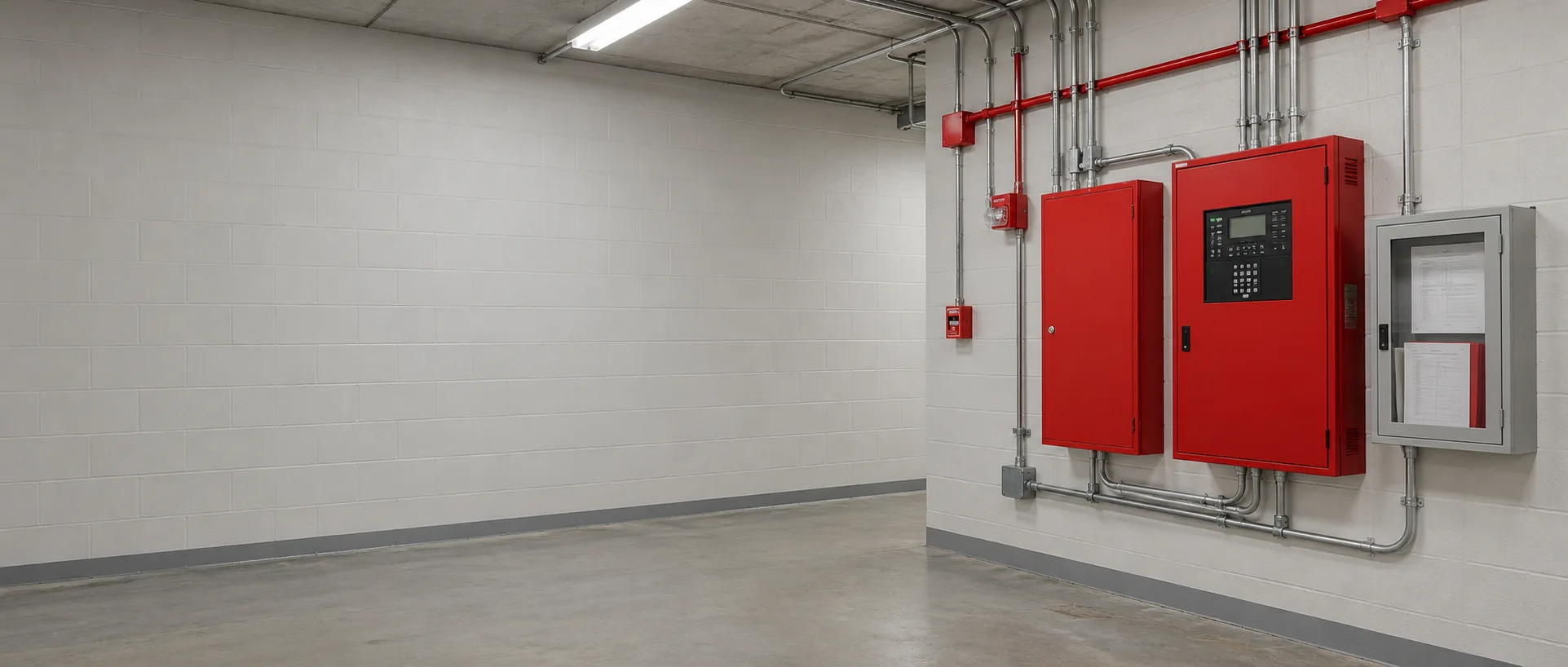
Before walls close
Review building use, floor plans, construction stage and existing systems. Identify cable access, device placement and trade coordination needs.
Commercial fire & life safety · North Texas
From your first set of plans to an existing-system takeover, NTEX Security helps coordinate the fire alarm work your property needs.
New construction, tenant build-outs, monitoring, inspections and repairs. Start with the building. Plan around the people who use it.
Some of the organizations we’ve worked with




Find your starting point
NTEX Security provides commercial fire alarm installation, existing-system takeovers, monitoring, inspections and repairs across Dallas–Fort Worth. Choose the option below that matches your building and project needs.
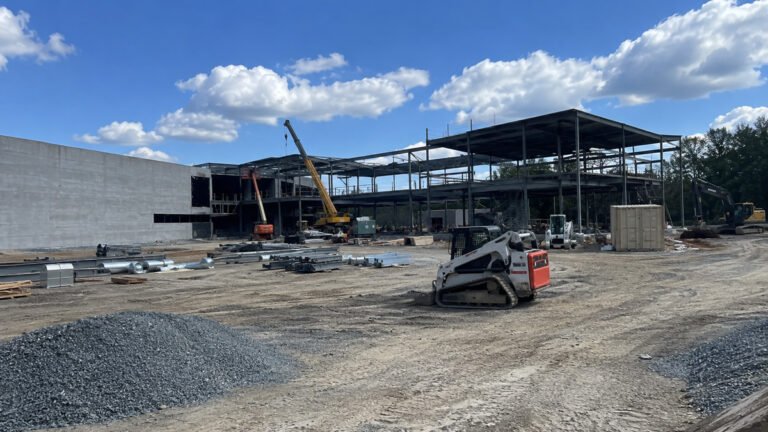
Bring the scope into the construction schedule before access becomes harder and changes become more disruptive.
New construction & tenant improvements
A new building, tenant build-out or remodel can affect device locations, notification coverage, cable routes and connections to existing equipment. Early review gives the project team time to coordinate the work.
Review building use, floor plans, construction stage and existing systems. Identify cable access, device placement and trade coordination needs.
Coordinate the agreed scope with your general contractor and project team, based on approved documents and applicable requirements.
Test the system, coordinate applicable acceptance steps and review the records, controls and ongoing services with your team.
Tell us what documents are available and the next construction milestone. Plans, existing inspection reports and city comments help focus the review. If you are unsure what you have, start with the address and project stage.
Existing fire alarms · Takeovers · Upgrades
A building may come with equipment and unanswered questions. We review what can be supported before recommending a monitoring transition, repair or replacement.
01 / Retain
Review the panel, devices, wiring, communicator and condition. Compatible, supportable equipment may remain part of the solution.
02 / Update
Identify programming access, unsupported components, reported deficiencies and changes that affect the existing system.
03 / Verify
Define monitoring arrangements, account contacts, communication and system-side testing before relying on the new setup.
Have the panel model, last inspection report or previous provider information? Keep it handy for the review.
Request a Takeover ReviewExplore the system
Select a component to see its role. The equipment, interfaces and communication path are selected around your property and project scope.
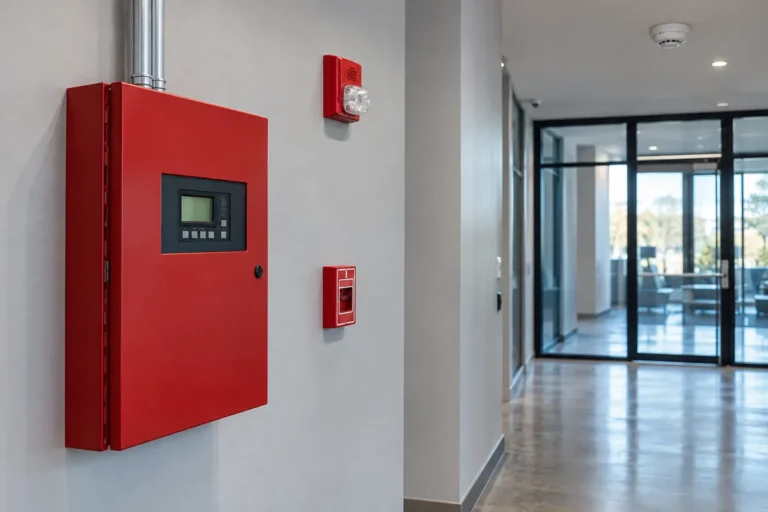
Conceptual overview of system functions. Actual equipment, connections and design vary by project.
Detection devices respond to conditions associated with fire. Smoke and heat detectors serve different environments and purposes; selection and placement follow the approved scope, applicable requirements and manufacturer instructions.
The panel receives system inputs, manages configured outputs and reports system conditions. Panel capacity, compatibility, available programming access and future changes all matter when reviewing a new installation or takeover.
Manual pull stations allow an alarm to be initiated by a person. Audible and visible notification devices alert occupants. Required locations and coverage depend on the building and approved project documents.
Applicable waterflow and valve supervisory signals can be connected to the fire alarm or dedicated monitoring system. Sprinkler piping, heads, hydraulic design and sprinkler-system service are a separate trade scope coordinated with the appropriate contractor.
Monitoring connects a compatible fire alarm system to an off-site monitoring provider. We review the communication equipment, signal transmission, account contacts and transition needs. Activation and notification procedures are confirmed as part of the monitoring arrangement.
Review system operation, available reports and the inspection or testing work relevant to your property.
Investigate reported trouble conditions, device issues and communication concerns, then explain corrective work.
Clarify service documentation, account information and next steps so your team knows how to support the system.
A coordinated project
NTEX Security is licensed in the State of Texas. We coordinate with owners, general contractors, city reviewers and local fire marshals on applicable fire alarm project requirements.
Requirements vary by property, building use and local jurisdiction. Final approval rests with the authority having jurisdiction.
Official resources Texas fire alarm licensing · Dallas fire protection review
Step 01
Review available drawings, existing equipment and the work being proposed.
Step 02
Identify applicable submittal and permit steps with the project team.
Step 03
Coordinate the agreed testing scope and required city or fire marshal steps.
Step 04
Review system information, monitoring arrangements and ongoing service needs.
Custom homes & multifamily properties
Larger homes, apartments, shared spaces and multi-tenant buildings call for an individual review. We assess building use, dwelling units, common areas and existing equipment to define the appropriate scope.
Your proposal reflects professional planning, equipment, installation and long-term support. Installation and ongoing services are identified clearly for your project.
Discuss a custom residential project →
Before you move forward
Practical guidance for building owners, general contractors and property managers.
Ask about your property →During design or early construction. Bring the fire alarm scope into the discussion before drywall, wall panels and ceilings close access. Approved plans, trade coordination, equipment lead times and testing all affect the schedule.
We review the panel model, devices, condition, programming access, communication equipment and available records. Some equipment may be retained. Unsupported or incompatible components, deficiencies and project requirements can change the scope.
A local device sounding does not, by itself, establish a monitored connection. A monitored system needs compatible equipment, an active monitoring arrangement and verified signal transmission. Notification handling follows the monitoring provider’s procedures.
Sprinkler monitoring concerns applicable waterflow and valve supervisory signals. Sprinkler piping, heads, hydraulic design and sprinkler-system service are a separate trade scope, coordinated with the appropriate sprinkler contractor.
Building use, size, layout, required equipment, cable access, existing-system condition, plans, permits and testing all affect the investment. We prepare a project-specific proposal that identifies installation, ongoing services and applicable fees.
Yes. Larger homes, apartments and multifamily properties are evaluated individually. Dwelling units, shared areas, building use and local requirements influence the scope. These are professionally planned projects with a property-specific investment.