On August 13, 2026, Flock Safety announced a set of changes to its license plate reader platform in response to mounting public backlash. If you own a business, sit on an HOA board, or manage an apartment community in Dallas-Fort Worth, the timing is relevant, because you may be deciding right now whether to put these cameras on your property.
Flock is already everywhere in DFW, and so is the pushback: cameras cut down and painted over, more than fifty cities and agencies canceling contracts this year, and here in North Texas, San Marcos removing every one of its cameras in early 2026. Before you sign a contract, it is worth understanding what these cameras do, whether they are legal in Texas, what Flock just changed, and what you still take on as the operator. Here is a straight breakdown from a commercial security integrator that installs and monitors these systems for a living. This guide covers Flock cameras for business, HOA, and apartment-community decision-makers across North Texas.
Most people assume a Flock camera is just a security camera. It is not.
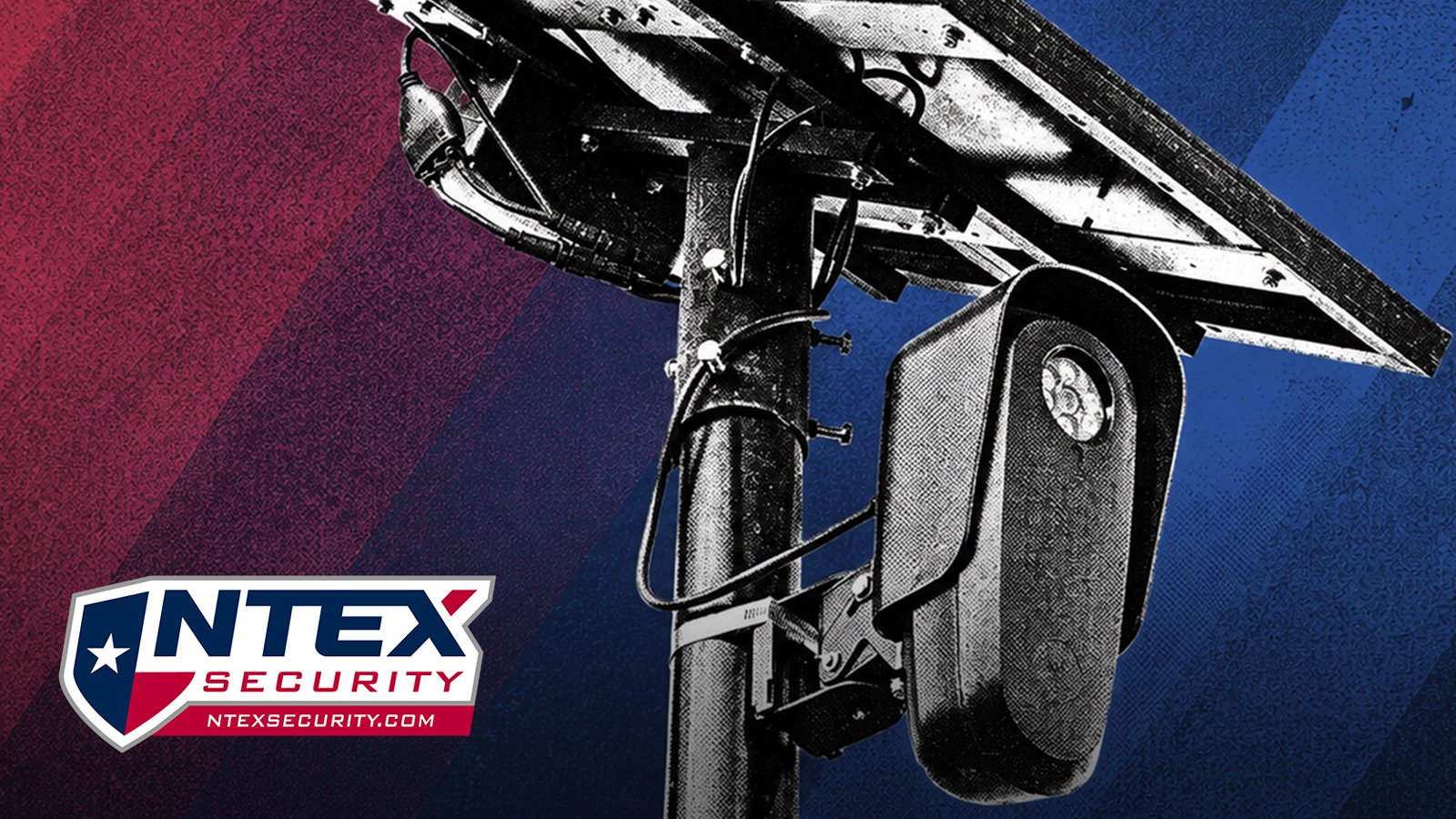
A standard security camera records video of a scene. You own the footage, it stays on your system, and you decide who sees it. A Flock camera is an automated license plate reader, or ALPR. Instead of just recording video, it photographs every vehicle that passes, then uses software to read and log the plate number along with the make, model, color, and even distinguishing details like bumper stickers, roof racks, and visible damage. It turns that into a searchable “vehicle fingerprint” and uploads it to a cloud database.
The key difference is the network. Many Flock systems are connected to a shared platform that other agencies can search. Some law enforcement queries reach across thousands of camera networks nationwide. A normal camera watches your property. A networked ALPR can become one node in a national system, and that distinction is the source of nearly every controversy attached to the technology.
Very. The Dallas Police Department operates more than 650 Flock cameras across the city, and the City Council approved an expansion in 2025. Fort Worth went a step further in a way that directly affects private property owners: the council approved a 20-year license allowing Flock to install non-police cameras in city rights of way, largely because HOAs and businesses requested it.
Across the metroplex, these cameras are typically mounted at city limits, major intersections, neighborhood and HOA entrances, and retail parking lot exits. As of Flock’s August 2026 policy change, captured data is deleted on a rolling seven-day cycle by default, shortened from the previous 30 days, though data tied to a case number can be held longer.
For a property owner, both the crime-solving benefits and the privacy backlash are already playing out in your own market.
Yes, they are legal. But legal and unregulated are not the same thing. Texas does not heavily restrict private ALPR use, and there is no comprehensive federal law governing collection, retention, or sharing. That permissive environment is why privacy advocates are alarmed, and why documented abuse cases carry weight.
The most cited example happened in the DFW metroplex. A Johnson County sheriff’s office ran ALPR searches across thousands of networks in connection with a woman’s private medical decision, with the stated search reason logged in plain text. That is documented, not hypothetical, and cases like it drove the scrutiny that led to Flock’s 2026 platform changes.
On August 13, 2026, Flock announced a set of changes meant to address privacy concerns and documented misuse by some law enforcement users. They change some facts on the ground, but they leave the operator’s core problem untouched.
The genuine improvements, mostly aimed at the police side of the network, include a shorter default data retention window of seven days, a mandatory audit tool that flags unusual search activity and locks the user out pending review, a requirement that officers tie each search to a specific case number, and a control that lets a department decide which offense types outside agencies can search its data for. Most of these become mandatory on January 1, 2027. Taken at face value, these are real steps, and privacy groups acknowledged the shorter retention window as a move in the right direction.
The reaction was still skeptical. Civil liberties advocates described much of the package as a repackaging of existing, inadequate safeguards, and one prominent public-interest law firm called it window dressing from a company under pressure. Their central point is that police officers still decide who gets searched and when, without a warrant, and a company policy change does not fix that.
Here is the part that applies to you as an operator. Every one of these changes is about how law enforcement uses the shared network. None of them changes what a business or HOA takes on when it operates an ALPR. You are still the data custodian. Drivers still cannot opt out. Your camera still feeds a network you do not control. A shorter retention window and new audit requirements also show how fast this space is changing, which is a poor foundation for a long-term security decision.
Most vendors skip the question the person paying for the system should ask first: what are you liable for as the operator?
When your business or HOA operates an ALPR, you are not just buying a security tool. You are potentially becoming the custodian of a database of your neighbors’ and customers’ movements. That role is starting to carry real legal duties.
Courts in other states are already moving in this direction. California appellate rulings have found that private ALPR operators, not just police, must maintain a properly disclosed privacy policy, and that failing to do so can create civil liability separate from any criminal case. In 2026, plaintiffs’ attorneys are building class-action theories around a straightforward argument: residents and passersby never consented to having their plates catalogued in a private surveillance database. Texas law here is unsettled rather than settled in your favor.
There is also a control problem specific to the shared-network model. In Fort Worth, the police department can bypass normal open-records processes to access private HOA and business cameras that owners have connected to the system. Once your camera feeds a shared network, you give up meaningful control over who sees the data your property collects and why. For a volunteer HOA board, that is a serious amount of exposure to take on for people who never voted for it.
None of this makes Flock illegal or useless. It means the operator, not the vendor, absorbs the liability, and most operators sign without realizing it.
Flock does not publish pricing, so the figures below come from public procurement records and independent third-party analyses rather than a single quote. Based on those sources, a Flock license plate camera commonly runs about $2,500 to $3,000 per camera per year, plus a one-time installation fee that usually lands in the low hundreds per camera but can run higher depending on the site work.
With Flock cameras for business use, the figure to focus on is not year one. It is the structure. Flock is a lease, not a purchase. You never own the camera. The annual fee bundles the hardware, cellular connectivity, cloud storage, software, and maintenance, and if you stop paying, Flock removes the equipment. There is no point at which the hardware is paid off and your cost drops. Contracts are typically multi-year with auto-renewal, and renewal prices can rise. At scale it compounds: a ten-camera deployment commonly runs in the range of $25,000 to $30,000 per year.
For an HOA or business, that is a recurring line item with no end date, no asset to show for it at the end, and, because the data lives on Flock’s shared network, no exclusive control over who sees what your cameras collect.
Here is how a leased Flock deployment compares with a system you own and have installed by a security integrator:
| Flock (leased) | An owned system from NTEX | |
|---|---|---|
| Cost structure | Recurring annual fee per camera, indefinitely | Upfront investment, then low ongoing cost |
| Hardware ownership | You never own it; removed if you cancel | You own the equipment outright |
| Data ownership | Stored on Flock’s shared network | You own and control the footage |
| Outside access | Thousands of agencies can query the network | No outside access without your approval |
| Contract | Multi-year, auto-renewing, price can escalate | No perpetual per-camera lease |
| Integrations | Closed system | Integrates with access control and monitoring |
| Long-term cost | The meter never stops | Typically far lower over 3 to 5 years |
We do not publish a single sticker price, because a real number depends on your property, camera count, and how you want the system monitored. But for most commercial properties in Dallas-Fort Worth, an owned system costs meaningfully less over a three to five year window than an equivalent Flock lease, and you own both the equipment and the data at the end of it. Use the form on this page for a straight quote on what your property would actually run.
For most owners weighing Flock cameras for business or HOA use, the decision comes down to one distinction. The problem is not cameras. It is networked, shared, database-driven surveillance you do not fully control, on a platform whose rules changed again this month.
An owned, non-networked security system gives you the deterrence and evidence you actually want without the liability that comes with feeding a national database. A professionally designed system can include high-resolution cameras that you own outright, AI-driven live video monitoring that puts a trained operator on a real-time threat instead of just logging plates after the fact, and access control that manages who comes and goes at your entrances. You keep the footage. You control who sees it. You are not exposed as the custodian of a searchable movement database, you are not tied to a shared network you cannot govern, and your security posture does not shift every time a vendor updates its policy under public pressure.
For a Dallas-Fort Worth business, apartment community, or HOA weighing Flock, that is usually the smarter path: real security outcomes, far less legal and reputational risk.
NTEX Security designs, installs, and monitors commercial security systems across the Dallas-Fort Worth metroplex, including owned camera systems, CHeKT AI live video monitoring, and access control. If you are weighing Flock against an owned solution for your business, apartment community, or HOA, we will give you a straight assessment of what actually fits your property and your risk tolerance. Contact us for a consultation.