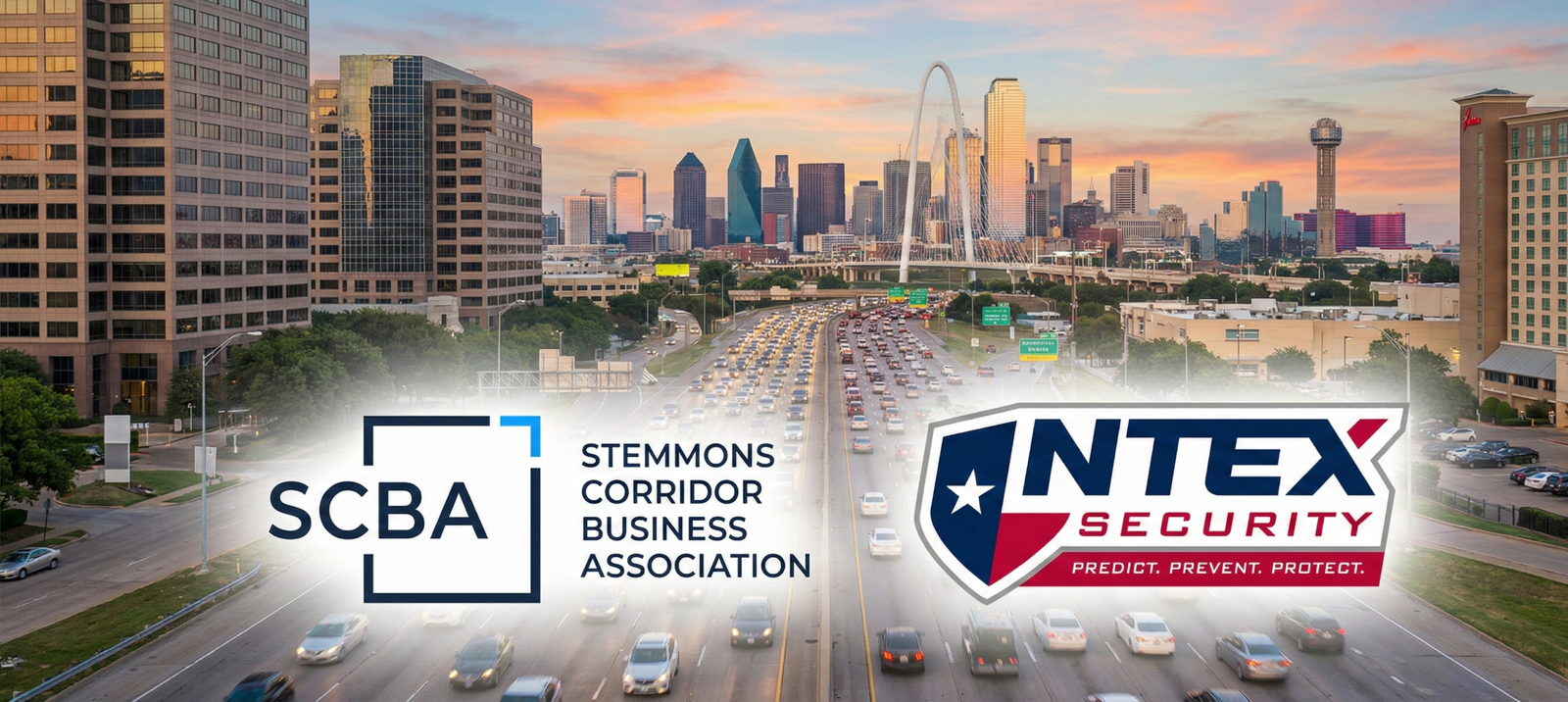
NTEX Security Joining SCBA is a practical move for our team and our customers because it connects our work to the corridor’s organized, on-the-ground public safety efforts with the Dallas Police Department.
The Stemmons Corridor is one of Dallas’ busiest business zones, with offices, hotels, healthcare-adjacent buildings, distribution sites, and light industrial properties tied closely to I-35E. That mix creates a predictable reality: lots of vehicles, lots of visitors, and plenty of opportunity for theft when access points and parking areas are not managed well.
The Stemmons Corridor grew into a major commercial hub because it sits at a high-traffic, high-access crossroads for Dallas commerce. As development accelerated, business leaders pushed for coordinated improvements that supported growth, including infrastructure, planning, and district upkeep.
SCBA’s roots go back to the early 1980s, when local businesses organized to address corridor needs and keep the area moving forward. Over time, as the footprint of business activity expanded, the association expanded too, reflecting the corridor’s size and the range of industries operating here.
SCBA shares their background here: SCBA history and a corridor overview here: Stemmons Corridor at a glance.
SCBA’s approach to safety is structured. Their Board is dedicated to working with the Dallas Police Department (DPD) to support a safe business environment for members, including ongoing crime statistical analysis and frequent Public Safety meetings that help identify problem areas and allocate resources across the Stemmons Corridor.
For property teams, this is where public safety becomes actionable. When the corridor is reviewing trends together, it is easier to decide where lighting needs to be corrected, which lots need better coverage, and which access points are getting abused.
SCBA outlines their public safety focus here: SCBA public safety focus.
Most issues are not one-time, movie-style break-ins. They are repeat patterns that take advantage of gaps in parking visibility, after-hours access, and inconsistent processes across tenants.
NTEX Security Joining SCBA matters here because patterns do not stop at one property line. When a corridor shares trends and stays connected to DPD, businesses can tighten the right areas before incidents become a weekly routine.
These are the exact situations where commercial security design matters more than adding devices. You need coverage that matches movement, and access rules that match how people actually use the building.
Many commercial sites still rely on alerts that do not include context. A signal goes out, but there is no quick way to confirm what happened, where it happened, or whether it is real.
NTEX Security offers verified response workflows by designing systems that connect alarms to video, user verification, and monitoring processes. That reduces false alarms and improves the quality of information available during an incident.
For background on Dallas alarm expectations and response practices, this DPD resource is helpful: Dallas Police Department alarm information.
Parking lots are where many corridor incidents start. The difference between “we think it was this car” and “we have a clear plate capture and timeline” is the difference between a dead end and a solvable case.
Office security gets complicated when keys and codes float around. Turnover happens, suites change, and vendor access grows without a clean way to remove it.
With keyfob access and managed credentials, you can remove access quickly, limit access by schedule or door, and review door events during investigations. When access events and video are tied together, you also get a cleaner timeline when an incident needs to be reviewed.
This is why integrated systems often make the most sense in busy corridors with multiple doors, multiple tenants, and lots of after-hours activity.
If NTEX Security Joining SCBA has you thinking about how to show up prepared, here is what helps DPD and corridor partners act faster when a pattern is developing:
If you manage a property in or near the corridor and want a clear plan that combines commercial security, office security, keyfob access, license plate readers, cameras, and verified response, NTEX Security Joining SCBA means we are even more connected to the corridor’s real priorities. We can walk the site, identify the highest-risk areas first, and provide a straightforward scope you can use.
What does SCBA do for public safety in the Stemmons Corridor?
SCBA supports ongoing crime statistical analysis and holds frequent Public Safety meetings to help DPD identify problem areas and allocate the right resources.
What is verified response and how does it help commercial sites?
Verified response confirms an event using video or other validation so alerts come with better information, fewer false alarms, and clearer details for decision-making.
Do license plate readers actually help with car theft and break-ins?
Yes, when they are placed correctly. A good capture point at a slow-down lane can provide plate data and timestamps that support investigations and pattern tracking.
How does keyfob access improve office security?
It makes access easier to manage, allows fast removals when staffing changes, and creates an audit trail that supports investigations and accountability.
How does SCBA membership help businesses in the Stemmons Corridor?
It helps businesses stay connected to corridor-level public safety priorities and real incident trends, so security improvements are based on what is happening locally, not guesses.