If you are evaluating warehouse alarm systems Dallas TX, the biggest mistake is treating the building and the yard like separate problems. Most losses start with movement around trailer rows, gates, and dock doors, then turn into an inside issue once someone reaches inventory, equipment, or interior access points.
A strong warehouse setup has to cover both sides of the operation. The yard matters because that is where people approach, test access, and move around after hours. The interior matters because that is where product, tools, offices, and high-value areas actually sit. If one side is weak, the whole site is easier to exploit.
It is easy to focus on trailer drops, gate traffic, and perimeter movement because those areas feel exposed. But warehouses also have inside vulnerabilities that get missed all the time. Office entries, stock cages, overhead doors, side corridors, and inventory staging areas can all become easy targets when the interior layout is not part of the plan.
That is why warehouse alarm systems Dallas TX should be built around the full workflow, not just outdoor motion. The goal is to know when someone approaches the site, when they enter the building, and where they move once they are inside.
Yard coverage still matters because many incidents begin before anyone gets inside. Trailer rows, gate approaches, and dock areas create the first openings.
These are the outside issues most owners notice first. They are real, but they are only half of the picture.
Once someone gets past the yard, the next question is what happens inside. That is where many warehouse systems fall short. Interior coverage is often too broad, too limited, or focused on the wrong areas.
Dallas TX warehouse security gets much stronger when the plan follows the movement from gate to dock to interior access points, instead of treating each area like a separate project.
Whether the issue starts outside or inside, most warehouse incidents still fall into three moments. If you tighten these, the rest becomes easier to manage.
1) Arrival: This is the best time to confirm trailer number, seal condition, delivery timing, and who is supposed to be on site. It is also the right time to catch unusual vehicles or unexpected after-hours movement.
2) Transition: This is the handoff point from the yard to the building. Dock doors, side entries, and staging lanes should not become blind spots. This is where outside access turns into inside exposure.
3) Overnight idle: After-hours downtime is when repeat movement, door tampering, and interior access often go unnoticed unless alerts are set up for the actual way the building operates.
Plenty of warehouses have alarms and cameras. Fewer have a layout that actually helps when something goes wrong. Good coverage should answer four questions every time: who, what, where, and when.
Warehouse security in Dallas TX works better when you can follow the path of movement from the approach outside to the activity inside. That is what turns footage and alerts into something useful.
If you want a practical walk-through list, start here. warehouse alarm systems Dallas TX perform better when the event logic matches both your yard traffic and your indoor routine.
Most warehouse issues are not caused by a lack of equipment. They usually come from alert rules that are too broad, blind spots at transition points, or settings that do not reflect real operations.
Outdoor-only focus: This can leave dock interiors, offices, and staging zones under-protected.
Indoor-only focus: This misses the approach path, gate movement, and trailer activity that often starts the problem.
Better setup: Clear coverage at gates, dock transitions, interior access points, and key inventory areas, combined with alerts that match your real workflow.
If you are comparing warehouse security services in Dallas TX, the real question is whether the system gives you a clean timeline from the first approach outside to the final movement inside.
Any setup that fights the way your warehouse actually runs will get ignored, bypassed, or turned down. The better approach is a straightforward workflow built around your shipping schedule, close process, and after-hours activity.
Start with the basics: who should be in the yard after hours, which dock doors should open, what interior movement is normal, and what activity should trigger a response. Then line up your alert rules and coverage around that routine.
If your site has recurring theft, tampering, or suspicious activity, the Dallas Police Department’s Business Crime Watch program can be a useful prevention resource. Dallas PD Business Crime Watch
For broader context on cargo theft and related activity, the FBI’s cargo theft overview is another solid reference. FBI cargo theft overview
If you are dealing with trailer tampering, missing pallets, false alerts, unexplained door activity, or too many “nobody saw anything” moments, the fastest next step is usually a site walk. That is where outside and inside gaps become obvious.
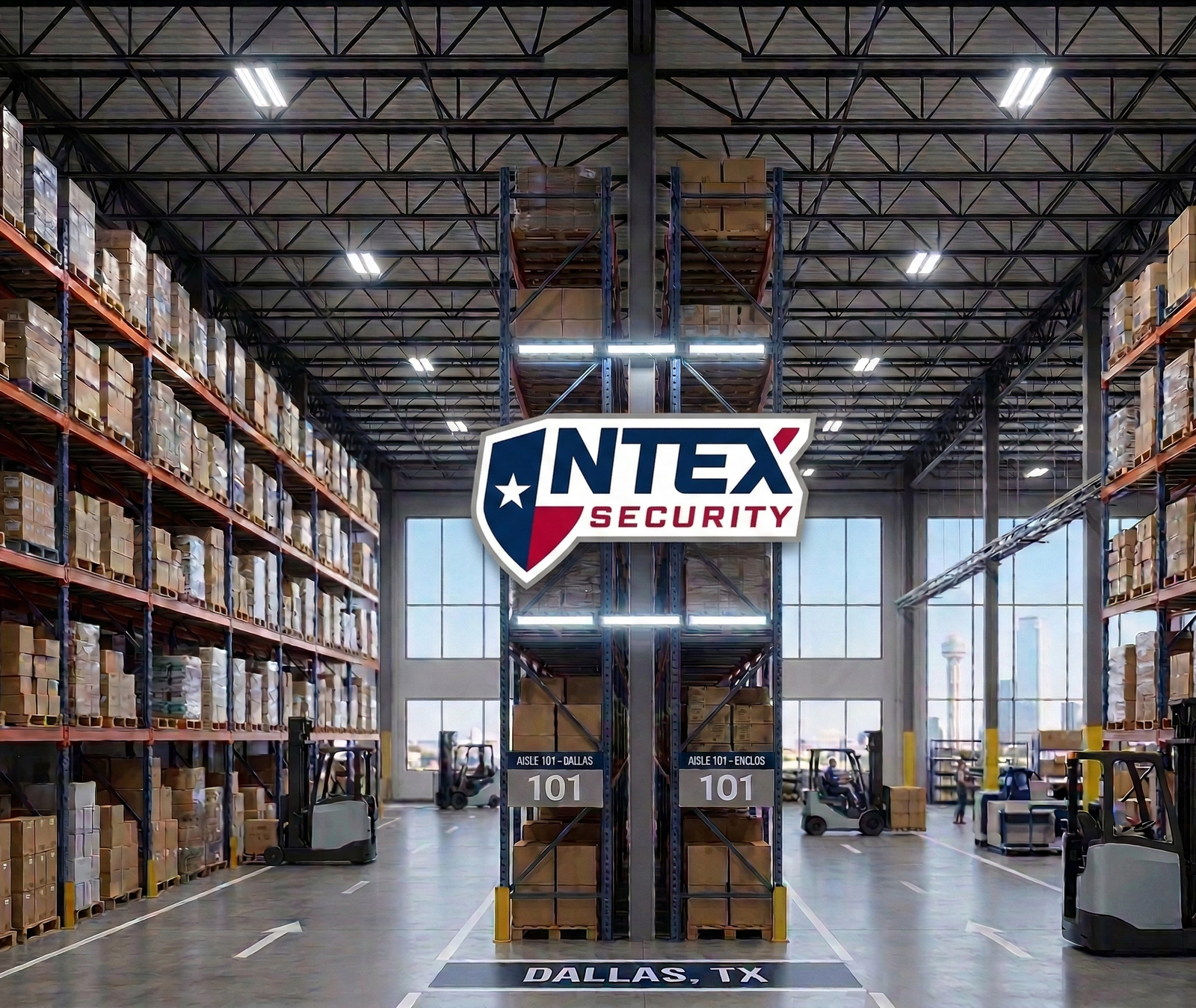
NTEX Security provides free quotes for warehouse projects. We start with a site walk so we can look at trailer rows, gate flow, dock doors, interior access points, lighting, and what your current setup actually captures. After that, we put together a quote based on your layout and your hours, not a one-size package. If you are comparing warehouse alarm systems Dallas TX, a walkthrough is the fastest way to see what fits your building and your yard.
Many teams start by searching for a warehouse alarm systems company in Dallas TX, but what they really need is a plan that makes sense from the property line all the way to the inside of the building. That is where a site-first quote helps.
Should warehouse alarm systems focus more on the yard or the inside of the building?
They need to cover both. The yard is where many issues begin, but the building interior is where inventory, offices, and key access points are at risk. A better setup follows movement from the outside approach to the inside activity.
What interior areas should a warehouse review first?
Start with dock-to-interior transitions, inventory staging areas, office entries, side corridors, and overhead doors. Those are the places where indoor blind spots usually create the biggest problems.
Do warehouse alarm systems Dallas TX need to be different from a standard commercial setup?
Yes. Yard traffic, dock access, trailer rows, and after-hours movement all change how alerts should be configured. A standard indoor setup usually misses the way a warehouse property actually operates.
What is the biggest mistake with after-hours warehouse alerts?
Using alert zones that do not match real workflow. If normal activity triggers the system all night, people stop trusting the notifications.
Does NTEX Security provide free quotes for warehouse alarm systems?
Yes. NTEX Security starts with a free site walk to review trailer drops, gates, dock doors, lighting, interior access points, and current coverage. Then we build a quote around your layout and your hours so the recommendation actually fits the site.